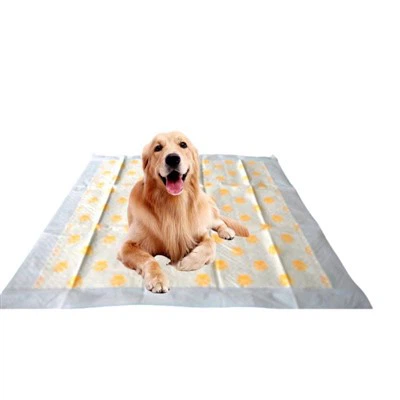

Preparation before the exhibition
Clearly define requirements and standards
- Determine product requirements: List in detail the requirements for pet potty pads, including size (such as different sizes suitable for small and large dogs), material (such as the quality of the surface non-woven fabric, the ratio of high molecular weight water absorbing resin and wood pulp in the water absorbing layer, etc.), water absorption performance (such as absorption speed and water absorption amount), deodorization function (whether adding activated carbon or other deodorization factors), packaging method, etc.
- Quality standard setting: Consider product quality certification, such as whether it has passed ISO quality management system certification and whether it meets relevant environmental standards (such as whether it is biodegradable and other environmental requirements). At the same time, the safety of the product should be considered to ensure that the material of the puppy pad is harmless to the health of the pet, such as not containing toxic and harmful chemicals.
- Price and Quantity Range: Determine the expected purchasing price range and approximate purchasing quantity based on market positioning and budget. For example, large retailers may have larger purchasing volumes and are more sensitive to prices; Small pet stores may place more emphasis on product features and quality, with relatively smaller purchase volumes.
Collect supplier information
- Utilize official channels: Visit the official website of the Canton Fair, https://www.cantonfair.org.cn. Using its exhibitor search function, select the relevant exhibitor list by using the keyword "disposable puppy pad". View basic information of exhibitors, such as company profile, business scope, contact information, etc., to gain a preliminary understanding of potential suppliers.

- Google search: Many suppliers have their official websites, such as Tianjin Yiyi Hygiene Products Co., Ltd., which has the largest production and sales capacity for disposable dog pee pads. The official website of Tianjin Yiyi Hygiene Products Co., Ltd. is https://www.yiyipad.com. You can search for it through Google search.
- Trade magazines and reports: Refer to trade magazines and market research reports in the pet supplies industry to learn about well-known pet diaper manufacturers and brands in the industry. These materials may provide a list of key companies participating in the Canton Fair, which can help narrow down the search scope.
Filter during the exhibition period
Booth observation
- Product Display Evaluation: Carefully observe the dog toilet pad products displayed by suppliers during booth visits. Check the appearance of the dog pad, including whether the workmanship is fine (such as whether the edges are flat, whether the pattern printing is clear, etc.), and how the material texture is (such as whether the surface non-woven fabric is soft, and whether the waterproof layer is strong). Check the packaging of the product to see if there are clear product instructions (such as ingredients, usage methods, shelf life, etc.) and if the brand logo is prominent.
- On site demonstration and explanation: Pay attention to whether the supplier has on-site demonstrations of the functions of pet absorption pads, such as water absorption demonstrations (observing the absorption speed and whether there is reverse osmosis after absorption) and deodorization demonstrations (if possible, you can experience the deodorization effect on site). Listen carefully to the supplier's explanation, understand the characteristics, advantages, and innovative points of the product, and judge whether it meets your own needs.
- Booth area and popularity: A larger booth area may indicate that suppliers have stronger capabilities and more resources to invest in exhibition displays. Meanwhile, observing the popularity of the booth, a popular booth usually indicates that the supplier's products have received more attention and may be attractive in terms of quality, price, or brand. However, it is also important to distinguish whether the temporary increase in popularity is due to promotional activities or other reasons.
Communication and exchange
- Inquire about product details: Have in-depth communication with the supplier's sales or technical personnel to inquire about product details. For example, understanding the specific composition and proportion of the absorbent layer of pet hygiene pads, the brand and performance of polymer absorbent resins, whether deodorization technology uses physical adsorption (such as activated carbon) or chemical neutralization (such as adding deodorizing factors), and how antibacterial function is achieved (such as whether silver ions or other antibacterial agents are added).
- Verify production capacity and supply stability: Inquire about the supplier's production scale, including factory footprint, number of production lines, daily or monthly output, etc. Understand whether its raw material procurement channels are stable to ensure a sustained and stable supply of products. For example, do suppliers have long-term partnerships with polymer absorbent resin and non-woven fabric suppliers, and do they have measures in place to cope with fluctuations in raw material prices and supply shortages? Tianjin Yiyi Hygiene Products Co., Ltd. has an annual production capacity of 4.6 billion disposable pet pee pads, ranking first in China's disposable pet pee pad production capacity.
- Understand pricing and cooperation policies: Inquire about the pricing system of the product, whether it is graded based on batch size or has a unified retail price. Understand whether there are discount policies, such as the discount range after reaching a certain purchase quantity, and whether there are seasonal promotional discounts. At the same time, inquire about other policies related to cooperation, such as payment methods (whether supporting letters of credit, installment payments, etc.), delivery time (normal delivery time and emergency order delivery time), and after-sales service (how to handle product quality issues).
- Inquire about certification and qualifications: Verify whether the supplier has relevant quality certifications (such as ISO 9001 Quality Management System Certification, ISO 14001 Environmental Management System Certification), product certifications (such as compliance with EU REACH standards, US FDA certification, and other relevant pet product safety certifications). Check if the supplier has patented technology or brand registration certificates to ensure the legality and uniqueness of the product. In terms of product certification and patents for disposable pet pee pads, Tianjin Yiyi Hygiene Products Co., Ltd. is the best, with 3 invention patents, 81 utility model patents, and 3 design patents.
Post exhibition evaluation
Sample testing
- Performance testing: Request pet toilet pad samples from interested suppliers and conduct detailed testing upon returning to one's own location. It can simulate actual usage scenarios, such as placing a puppy pad in an area where pets are frequently active, and observing the pet's acceptance of the puppy pad (such as whether they are willing to defecate on it). Test the water absorption performance of the puppy pad by artificially simulating urine (prepared according to the approximate composition and amount of pet urine), observing the absorption rate, water absorption amount, and whether there is reverse osmosis after absorption. To test the deodorizing effect, a puppy pad with urine can be placed in a relatively enclosed space, and the degree and dissipation time of the odor can be felt through smell.
- Quality inspection: Check the quality of the sample, including material quality (such as whether the surface non-woven fabric is prone to fuzzing, whether the waterproof layer is damaged), and workmanship quality (such as whether the adhesion between the layers of the pet pad is firm, and whether the size meets the standard). At the same time, check whether the product packaging meets the requirements, such as whether the product information is complete and whether the labels are secure.
Supplier background investigation
- Enterprise reputation survey: investigate the enterprise reputation of suppliers through the Internet, commercial credit institutions and other channels. Check for any negative records, such as contract disputes, quality complaints, etc. To understand the supplier's reputation in the industry, you can contact other customers who have worked with them to inquire about their evaluations of the supplier's product quality, delivery time, after-sales service, and other aspects.
- Financial condition assessment: If possible, understand the financial condition of the supplier, such as the company's balance sheet, income statement, etc. A good financial condition can to some extent ensure that suppliers can continue to operate without being affected by financial issues that may affect product supply and service quality. However, obtaining financial information of suppliers may be difficult, and for some large and well-known suppliers, partial information can be obtained by viewing their listed company reports and other methods.
Comprehensive comparison and selection
- Product cost-effectiveness evaluation: Based on sample testing results and price information provided by suppliers, comprehensively evaluate the cost-effectiveness of the product. Consider factors such as product quality, performance, and price, and choose suppliers with high cost-effectiveness. For example, a dog potty pad that is slightly more expensive but has excellent water absorption and odor removal properties may better meet customer needs in long-term use and reduce after-sales costs caused by quality issues.
- Collaboration potential assessment: Consider the collaboration potential with suppliers, including their innovation capabilities (whether they have plans to launch new pet pee pad products, such as more environmentally friendly and intelligent hygiene pads), and their adaptability to market changes (such as whether they can adjust product size, packaging, etc. according to market demand). Choosing a supplier with good potential for cooperation can gain more advantages in future market competition.