
Analysis of Why Cat Urine Odor Is Hard to Eliminate
Physicochemical Properties of Uric Acid Crystals
Cat urine consists of 95% water and 5% solutes. Uric acid is the core substance responsible for lingering odors. If untreated for a long time, uric acid forms crystals with the following characteristics:
- Water-insoluble: Regular water washing and ordinary cleaners cannot dissolve uric acid crystals.
- Crystallization & fixation: After seeping into gaps of fabrics or construction materials, it forms stable crystals that continuously decompose and release ammonia gas at room temperature.
Mechanisms Behind Ineffective Common Deodorizing Methods
- Conventional detergents: Only remove urea and cannot break down uric acid crystals.
- Fragrance-based products: Merely mask odors instead of eliminating the source of pollution, and tend to create more complex mixed smells.
Conclusion: Effective odor removal hinges on breaking down uric acid crystals, rather than physical adsorption or odor masking. Enzymatic cleaners are currently proven to efficiently decompose uric acid.
Cat Urine Odor Removal Solutions for Different Surfaces
| Material Type | Treatment Process | Key Precautions |
| Hardwood / Laminate Flooring | 1. Blot urine vertically with multiple layers of dry paper towels or disposable cat pee pads to soak up liquid 2. Spray enzymatic cleaner evenly and cover with airtight film 3. Let sit for 4–6 hours for full reaction 4. Remove the film, blot residual liquid with dry towels, and air-dry naturally for 24 hours | Blot vertically; do not wipe side to side to prevent urine spread |
| Carpets / Fabric Mats | 1. Soak in cold water mixed with enzymatic laundry detergent for 2 hours 2. Wash separately to avoid cross-contamination 3. Air-dry and expose to direct sunlight for 4 hours 4. Repeat the whole process if odor remains | Never use hot water |
| Tile / Concrete Floors | 1. Scrub grout lines thoroughly with a brush dipped in enzymatic cleaner 2. Let the solution soak and react for 30 minutes 3. Wipe dry with towels; do not rinse with water 4. Re-grout and seal heavily contaminated areas if odors persist | Construction joints and grout trap most urine; prioritize these areas |
| Genuine Leather / Faux Leather Surfaces | 1. Immediately blot all urine with dry towels or disposable cat pee pads 2. Apply leather-specific enzymatic cleaner 3. Wipe lightly with a barely damp towel and dry instantly 4. Apply leather conditioner afterward | Act fast to minimize liquid contact time with leather |
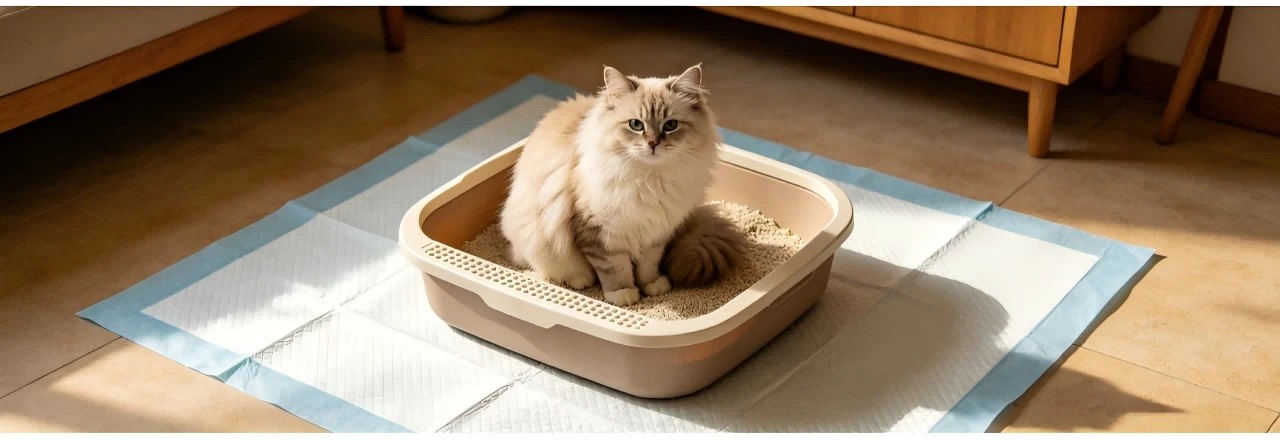
Preventive Application of Disposable Cat Pee Pads
Prevention Method
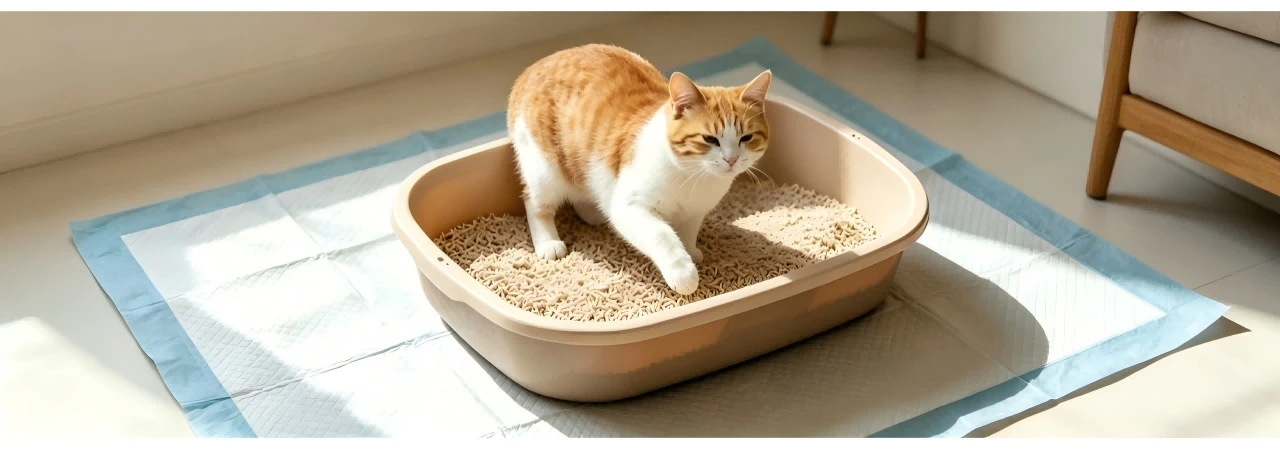
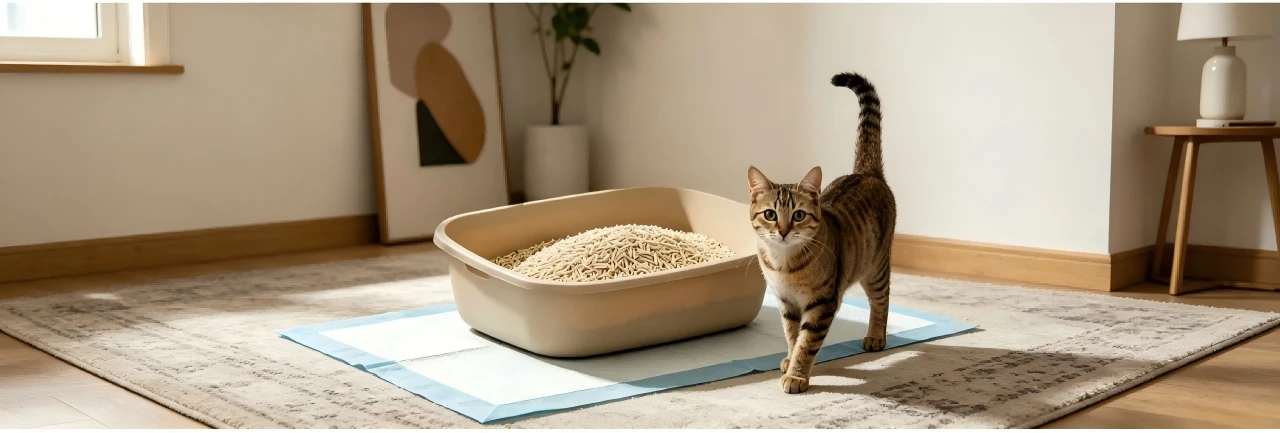
Use extra-large disposable cat pee pads to fully cover the floor surrounding the litter box.
Odor-Control Mechanisms of Disposable Cat Pee Pads
- Absorption & lock-in: The pads rapidly absorb cat urine and turn it into gel, stopping cats from tracking urine around on their paws.
- Leak-proof barrier: A waterproof PE backing prevents urine from seeping onto floors.
- Easy disposal: Single-use design; simply discard soiled pads without washing or sanitizing.