
Reasons Why Dogs Pee Everywhere
Before correcting this behavior, identify the root cause of inappropriate urination for targeted, effective solutions.
Physiological immaturity (mostly puppies)
Puppies aged 3–6 months have underdeveloped bladders and poor bladder control. They cannot regulate urination voluntarily and have not learned designated potty habits, so accidental peeing is normal. Simply train and guide them patiently.
Territory marking (mostly adult dogs)
Adult male dogs and female dogs in heat mark their territory with urine. They tend to release small amounts of urine frequently to assert dominance.
Health and age-related issues
Senior dogs suffer from weakened muscle tone and declining bladder function, leading to involuntary incontinence. Conditions such as urinary tract infections, bladder stones and diabetes can also cause frequent urination and inappropriate peeing. Seek veterinary examination promptly in such cases.
Stress and emotional distress
Moving to a new house or unfamiliar surroundings may trigger anxiety in dogs. They relieve stress and soothe emotions by urinating in random spots.

Establish Proper Potty Habits for Your Dog
Build a regular daily routine for your dog
Dogs follow a predictable excretion schedule. Maintaining a fixed timetable can drastically reduce indoor accidents. Optimal potty times: right after waking up in the morning, half an hour after each meal, after play or exercise, and before bedtime at night. Consistently take your dog to relieve itself at set times. Over time, it will form conditioned reflexes, develop regular potty habits and have far fewer accidents indoors.
Designate a fixed potty area
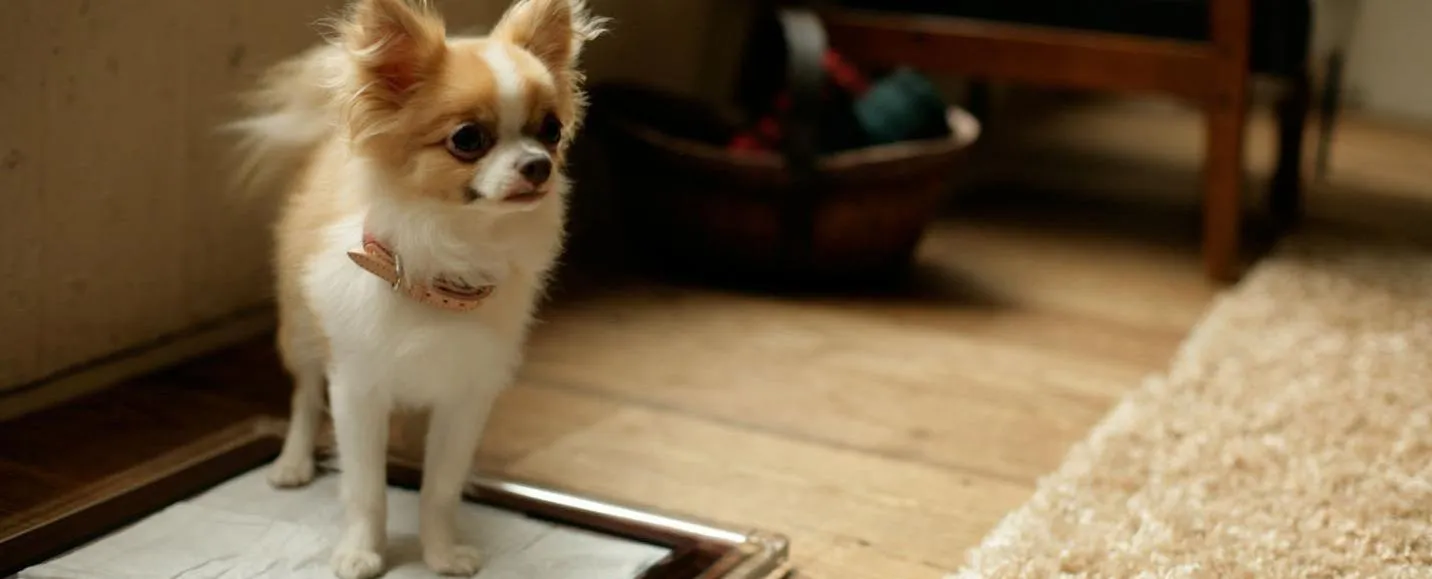
Dogs rely on scent memory to remember where to go potty. Frequently changing the location will disrupt training progress. Choose a quiet, well-ventilated corner away from food bowls and dog beds, such as a spot on the balcony or in the bathroom, as the exclusive potty zone. Keep this location unchanged throughout training to build stable spatial memory in your dog.
Spot pre-potty signals and guide your dog timely
Dogs show obvious signs before urinating: sniffing the ground with head lowered, circling repeatedly, pacing restlessly or looking around. Once you notice these behaviors, immediately lead your dog to the designated potty spot. If you catch your dog urinating in the wrong place, do not yell or punish it. Just clean up quietly. Post-hoc punishment confuses dogs; it will only learn to pee secretly instead of correcting the habit.

Reinforce desirable behavior
Positive reinforcement is the most effective training method. Within 3 seconds after your dog successfully pees in the assigned area, reward it immediately with treats, gentle petting and verbal praise. This helps your dog clearly understand: peeing here brings rewards. Continuously reinforce good conduct until it voluntarily uses the designated potty spot.
Use dog potty pads
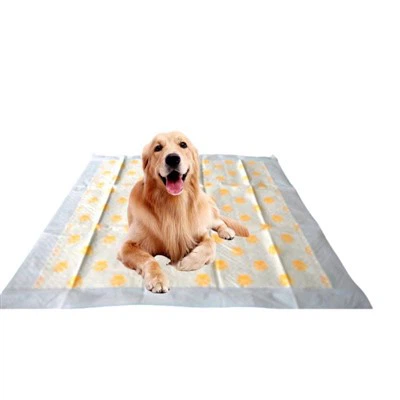
Disposable pet potty pads are practical aids for house-training dogs. They ease cleaning burdens and speed up training. Premium disposable dog potty pads feature a multi-layer structure: skin-friendly and breathable top layer, absorbent core that traps urine rapidly to prevent backflow, and a waterproof backing to protect floors and carpets. During training, the pads prevent leakage when your dog uses the correct area. For accidental messes, flip the pad with the absorbent side down to soak up urine quickly for easy cleanup.