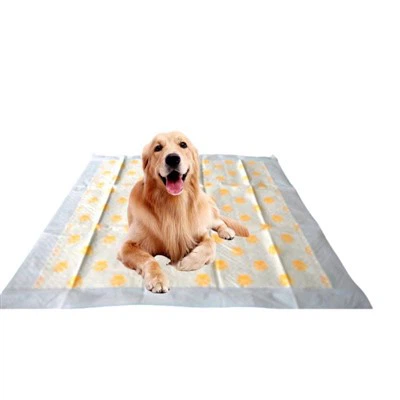
Eco-friendly materials in the disposable pee pad industry cover all structures including the surface layer, absorbent layer, and bottom layer. They include plant-based natural materials and various biodegradable synthetic materials, which can fully reduce the environmental burden caused by traditional materials. The specific classifications and applications are as follows:
Surface Layer Eco-Friendly Materials
- Bamboo Fiber Non-Woven Fabric: Combines the properties of natural plants and the processing advantages of non-woven fabrics. It is soft, skin-friendly, and breathable, containing natural bamboo kun for antibacterial and deodorizing effects. Derived from renewable sources, it can degrade naturally after disposal.
- Corn Non-Woven Fabric: Made from corn-related raw materials, integrating the advantages of natural fibers and man-made fibers. It is skin-friendly and can be completely degraded by microorganisms, avoiding the difficulty in degrading traditional chemical fiber non-woven fabrics. It is often used as the fabric layer of eco-friendly disposable pee pads.
- Pure Cotton Non-Woven Fabric: Processed from cotton into non-woven form, retaining the skin-friendly and moisture-absorbing characteristics of pure cotton. It reduces skin irritation and can degrade naturally after disposal, mostly used in the surface layer of mid-to-high-end eco-friendly pee pads.

Absorbent Layer Eco-Friendly Materials
- Bio-based Super Absorbent Polymer (BioSAP): Made from renewable biomass such as corn starch, this material has strong water absorption and retention capabilities. It can replace part of petroleum-based super absorbent resins, is degradable after use, and reduces carbon emission, serving as the core eco-friendly material for the absorbent layer of pee pads.
- Wood Pulp Fiber: A natural plant fiber with wide sources and degradability, which can become soil organic fertilizer after degradation. It also has strong practicality-mixing it with super absorbent resin to make the absorbent layer can improve absorption speed and leak-proof performance.
- Modified Polylactic Acid (PLA) Composite Fiber: It is made by mixing modified PLA with fluff pulp short fibers. PLA itself is a degradable material, and after modification combined with fluff pulp, it can solve the problem of easy cracking and agglomeration of traditional absorbent layers after moisture absorption. It also has good water absorption and biodegradability, suitable as an eco-friendly core material for pee pads.

Bottom Layer and Auxiliary Eco-Friendly Materials
- Spun-Grade PBAT Material: It can be made into bicomponent sheath-core fibers, etc. It can not only be used in the absorbent layer but also for the leak-proof material or composite layer of the pee pad's bottom layer. This material is 100% biodegradable, replacing PE leak-proof films to reduce plastic pollution.
- Starch-Based Plastic Film: Made from corn starch, etc., it can be used as the bottom film and packaging material of pee pads. It can degrade in a short time when landfilled in soil without polluting the soil, meeting the environmental requirements for the leak-proof bottom layer and product packaging of pee pads.
- Degradable Hot Melt Adhesive: It is used for bonding various layers of pee pad materials. Different from other chemical adhesives, it is completely degradable, avoiding environmental pollution caused by adhesive residues.