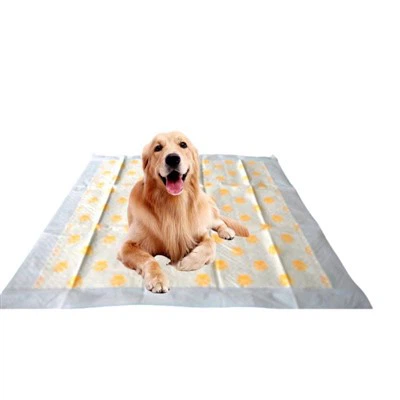
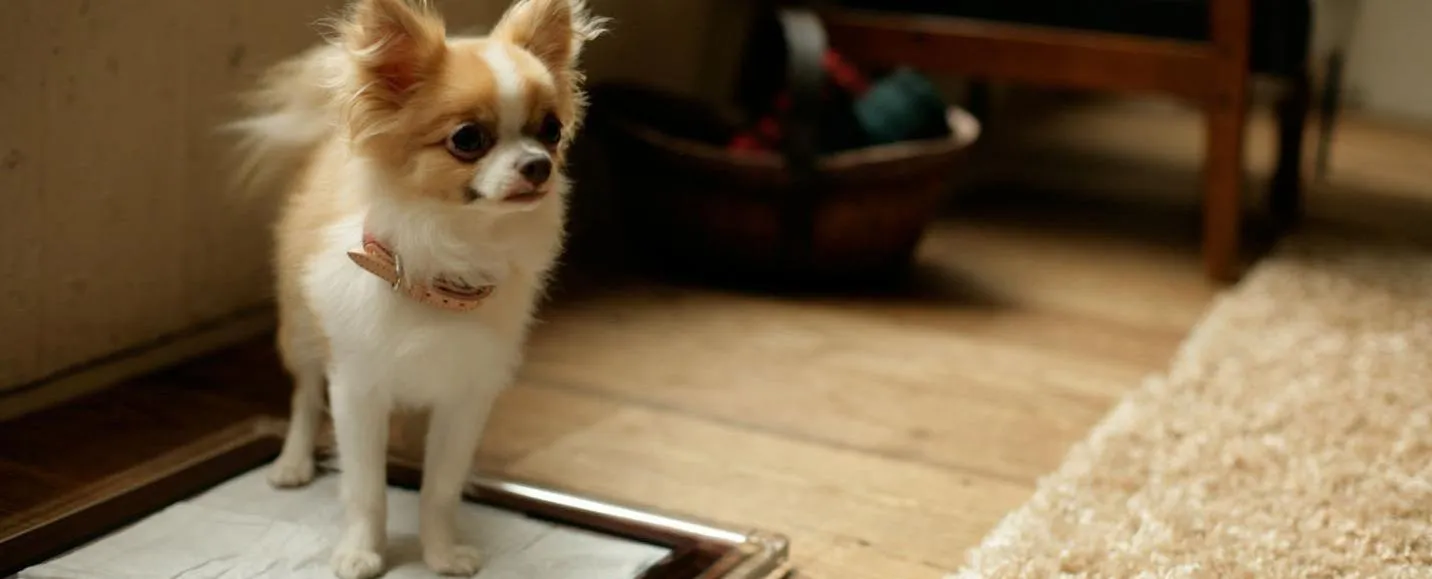
To prevent dogs from taking off disposable diapers, it is recommended to start with the three core dimensions of "choosing the right size, wearing them correctly, and reducing resistance behavior":
Choose the Right Size of Disposable Diaper
Measure the size accurately and do not choose an "improvised size". Deviations in the size of disposable diapers will directly lead to slipping off. You must measure the waist circumference before purchasing:
- Male dog's waist circumference: Let the male dog stand or sit naturally. Locate the end of the ribs (behind the widest part of the chest cavity), then move 2-3 centimeters backward until you reach the narrowest part of the waist muscles (there is no rib support here, and it is directly in front of the hip bones, so it will not shift when the dog moves). In addition, the measurement point should be above the genitals to prevent the diaper from pressing or rubbing against the genitals, which may cause discomfort to the dog.
- Female dog's waist circumference: Let the female dog stand or sit naturally. Find the end of the ribs, then move 2-3 centimeters backward to the narrowest part of the waist (this position is basically the same as that of male dogs, but since female dogs have no pressure from genitals, you can move it 1-2 centimeters downward to be closer to the abdomen to ensure that the physiological diaper can cover the lower part of the abdomen). This position must be directly in front of the hips (hip bones) to avoid choosing a too-large size due to being close to the hips (which may cause the diaper to slip off after wearing).
Refer to the merchant's size chart to select the size. Ensure that 1-2 fingers can fit into the waist after wearing (too loose will cause slipping, while too tight will strangle the skin). If the dog is a puppy in the growth period, it is recommended to choose a style with a "large adjustable range" (such as a hook-and-loop fastener that can overlap by 3-5 cm) to avoid frequent size changes.

Correctly Put on Disposable Diapers
- Putting on diapers for female dogs: First, pass the dog's tail through the tail hole of the diaper, support the urination area with the absorbent part, fasten the non-absorbent part on the back, and fix it after adjusting the tightness of the waist.
- Putting on diapers for male dogs: Align the absorbent part of the disposable diaper with the abdominal urination area of the dog, then wrap around and fix it.
Reduce the Dog's Resistance Behavior of "Actively Taking Off the Diaper"
Disposable diapers fit closely to the skin, and some dogs may struggle and tear them off due to "discomfort". Behavioral guidance can reduce the probability of diaper removal:
- Give rewards immediately after putting on the diaper to establish a positive association: After putting on the disposable diaper correctly each time, immediately feed the dog its favorite snacks (such as freeze-dried food) and play with it for 10 minutes (use a ball or a cat teaser to divert its attention). Let the dog realize that "wearing a diaper = good things happen" to reduce the behavior of twisting and biting due to resistance. In the initial stage, you can put the diaper on the dog 1-2 times a day, 30 minutes each time, and gradually extend the adaptation time.
- Replace the diaper in time to avoid "struggling to take it off due to wet discomfort": Disposable diapers will become heavy and wet after absorbing enough urine. Dogs will frequently shake their waists to take off the diapers because of discomfort. It is recommended that:
- For puppies or senior dogs, check the diaper every 2-3 hours and replace it immediately if it is wet;
- For adult dogs, adjust the replacement frequency according to the urine output, and the maximum time should not exceed 6 hours (even if it is not wet, it is recommended to replace it to keep it dry);
- When replacing the diaper, wipe the dog's abdomen/hip skin with a wet tissue to avoid residual urine irritating the skin and reduce resistance.

Pitfall Avoidance Guide: These Wrong Practices Will Aggravate Diaper Slipping
- Do not choose a "one-size-smaller diaper": Trying to prevent slipping by "tightening" will cause redness and strangulation marks on the dog's skin, and the dog will struggle more due to discomfort;
- Do not use tape/string for fixation: Disposable diapers are thin. Using tape will stick to the dog's hair (which may hurt the skin when tearing it off), and string may strangle the waist. Both have potential safety hazards;
- Do not let the dog wear the diaper for a long time: Disposable diapers are not as breathable as cloth. If the dog does not urinate at night, it is recommended to take off the diaper to allow the skin to breathe and avoid eczema or dermatitis.
Through "choosing the right size + correct wearing + behavioral guidance", most dogs can gradually adapt to disposable diapers and reduce the occurrence of slipping. If after trying various methods, the dog still frequently takes off the diaper and shows irritability (such as hiding in a corner or licking the skin frequently), it is recommended to consult a veterinarian to check for special issues such as skin sensitivity or movement disorders.