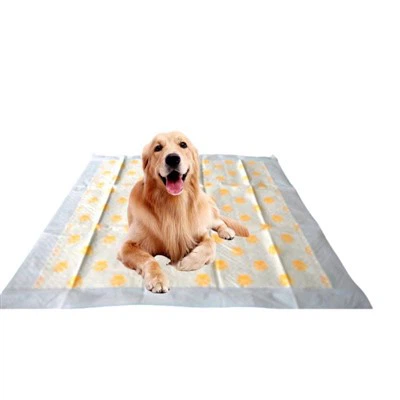
Disposable pet pads are typically composed of multi-layer composite materials, and the characteristics of each layer directly affect the pad's water absorption, water retention, leak-proof performance, and overall user experience. Below is a detailed breakdown of common material compositions and their specific impacts on the user experience:
1. Surface Layer Materials
Common Materials: Spunbond non-woven fabric, thermal-bonded non-woven fabric
Function: Rapidly absorb liquids and guide them to the lower layers, keeping the surface dry.
Impact on Experience:
(1) Hydrophilicity: Both spunbond and thermal-bonded non-woven fabrics have a microporous structure that quickly penetrates urine, preventing dogs' paws from getting wet.
(2) Softness:
Both materials are as soft as cotton, but thermal-bonded non-woven fabric is more fluffy with lower tensile strength.
Spunbond non-woven fabric is smoother and has higher tensile strength.
2. Absorbent Layer (Core Layer)
Common Materials: Sumitomo SAP (Japan), ordinary SAP, virgin wood pulp, recycled wood pulp, fluff pulp, deodorizing ingredients
Function: Rapidly absorb and lock in liquids to prevent backflow.
Impact on Experience:
(1) Absorption Capacity: SAP affects absorption capacity and backflow.
1g of Sumitomo SAP can absorb 200 times its weight in liquid and lock it without backflow, with high absorption efficiency.
1g of ordinary SAP can absorb 100 times its weight in liquid, with lower absorption efficiency.

(2) Absorption Speed: Among virgin wood pulp, recycled wood pulp, and fluff pulp:
Fluff pulp has the fastest water absorption speed, followed by recycled wood pulp, and then virgin wood pulp.
Faster absorption ensures a drier surface; slow absorption may cause liquid to overflow from the edges before complete absorption.
|
Indicator |
Virgin Wood Pulp |
Recycled Wood Pulp |
Fluff Pulp |
|---|---|---|---|
|
Raw Material |
Fresh wood |
Waste paper |
Virgin wood pulp |
|
Fiber Length |
Longer (1-2mm for chemical pulp, shorter for mechanical pulp) |
Shorter (<0.5mm after multiple recycling) |
Medium-short (0.8-1.2mm), loose "fluffy" structure with no tight fiber bonding |
|
Fiber Morphology |
Bundled, tight fiber bonding |
Fragmented, short, porous surface |
Single fibers separated, soft and fluffy like cotton |
|
Whiteness |
High (over 80% for chemical pulp) |
70%-85% after bleaching (more chemical residues) |
High (over 85%), main material for baby hygiene products |
|
Water Absorbency |
Moderate (tight fibers require penetration) |
Strong (porous structure) |
Extremely strong (fluffy structure increases surface area) |
|
Softness |
Soft (e.g., toilet paper pulp) |
Rough (many fiber breaks) |
Extremely soft (no rigid support from single fibers) |
(3) Leak Prevention:
SAP forms a gel after absorbing water, firmly locking in moisture to avoid backflow (liquid seeping back to the surface when squeezed). Severe backflow can wet pets' paws and dirty floors.
Fluff pulp absorbs liquid quickly, but if the fluff pulp ratio is too high and SAP is insufficient, water retention capacity decreases, and clumping or breaking may occur with long-term use.
(4) Odor Control:
Some absorbent layers add deodorizing ingredients (e.g., activated carbon, silver ions).
Activated carbon absorbs ammonia in urine to reduce odor; silver ions inhibit bacterial growth, minimizing unpleasant smells from bacterial decomposition.
3. Bottom Layer Materials
Common Materials: PE waterproof film (polyethylene film), breathable film
Function: Prevent liquid from leaking onto the floor.
Impact on Experience:
(1) Leak-Proof Performance:
High-quality PE film (30-50 microns thick) with firm heat-sealed edges completely blocks liquid penetration, protecting floors and bedding.

(2) Breathability:
Some products use breathable bottom films (microporous design) to reduce bacterial growth risks. Fully non-breathable films may trap moisture under the pad.
4. Other Auxiliary Materials
(1) Edge Protection Layer:
Material: Plastic crimping
Function: Prevent liquid from spilling over the sides. Loose or un-reinforced edges may cause leakage when pets step on the pad.
(2) Anti-Slip Layer:
Material: Anti-slip particles, rubber coating
Function: Fix the pad's position to avoid displacement or folding caused by pets moving the pad.
(3) Attractant:
Ingredient: Pheromones
Function: Attract pets to urinate on the pad, assisting in training puppies to use the pad.
Summary: Comprehensive Impact of Materials on Disposable Pet Pad Experience
|
Dimension |
Features of High-Quality Materials |
Issues with Inferior Materials |
|---|---|---|
|
Water Absorbency |
Fast surface drainage, sufficient SAP, high absorption speed and capacity |
Liquid retention on surface, slow absorption |
|
Water Retention |
Fluff pulp rapidly absorbs and transfers to SAP; SAP turns into gel to prevent backflow and side leaks |
Severe backflow, liquid seeps back when squeezed |
|
Leak-Proof |
Thick PE bottom film with high tensile strength, excellent leak-proof performance |
Damaged bottom film, easily torn edges causing leaks |
|
Comfort |
Fluffy and soft surface, high hygiene level |
Rough texture, low hygiene level |
|
Odor Control |
Absorbent layer with deodorizing ingredients, effective odor control |
Rapid odor emission, frequent replacement needed |
Tianjin Yiyi Hygiene Products Co., Ltd is the largest manufacturer of disposable puppy pads in China. Welcome to inquire.