Below are common questions and answers about disposable baby changing pads, covering product features, usage methods, safety concerns, etc., to help parents fully understand this type of product:
I. Basic Product Knowledge
1. What is a disposable baby changing pad?
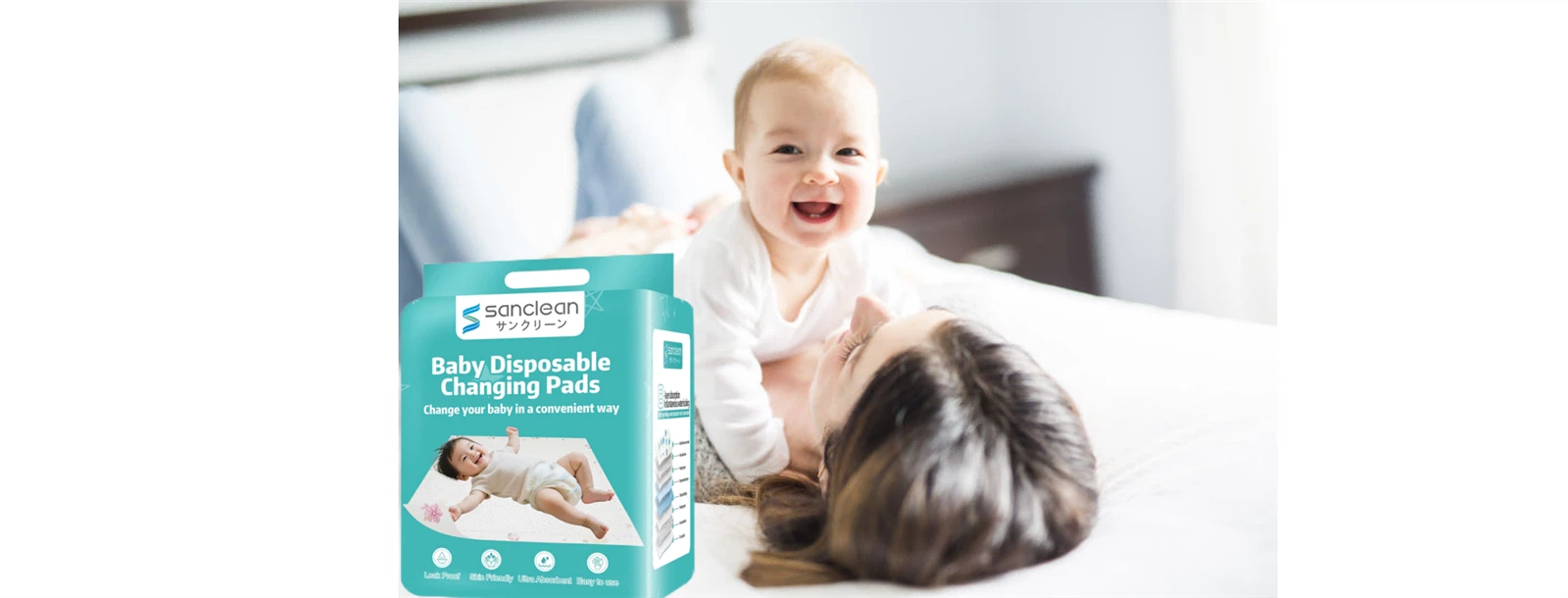
A disposable baby changing pad is a single-use hygienic product designed for infants, mainly used for temporary padding during diaper changes or outings to prevent urine from soiling clothes, bed sheets, or public facilities. It typically consists of three layers:
-
Top layer (skin-friendly non-woven fabric, tissue paper): Soft and breathable.
- Absorbent layer (wood pulp, superabsorbent polymer): Quickly absorbs and locks in liquid.
- Bottom layer (PE waterproof film): Prevents leakage and protects surfaces.
2. What is the difference between disposable baby pads, diapers, and reusable waterproof pads?
| Type | Core Function | Suitable Scenarios | Features |
|---|---|---|---|
| Diapers | Wrap-around absorption, requires fastening | Daily long-term wear | High absorbency, need frequent replacement |
| Disposable Pee Pads | Flat padding for absorption, no fastening | Diaper changes, outings, medical exams | Single-use, lightweight, hygienic |
| Reusable Waterproof Pads | Washable and reusable, placed on mattresses/carts | Long-term home use | Economical, eco-friendly, requires cleaning |
II. Usage Scenarios and Methods
1. When should I use a disposable baby changing pad?
- During diaper changes: Place on a changing table to prevent urine from soiling clothes or surfaces.
- Outings: Use in strollers, car seats, or public baby care rooms to avoid seat contamination.
- Medical exams: Lay on hospital examination beds or during ultrasounds for hygiene.
- Special cases: Temporary use during diarrhea or diaper rash care for better air circulation.
2. How to use it correctly?
- Unfold and flatten: Gently shake out the pad and lay it flat on the surface to be protected (e.g., changing table, stroller).
- Align the position: Ensure the center of the pad is under the baby's bottom to cover the main absorption area.
- Replace promptly: Discard immediately after the pad is fully absorbed or soiled, and clean the baby's bottom.
- Fold and dispose: Fold the used pad in half (with the soiled side inward) and dispose of it according to waste sorting rules.
III. Safety and Health Concerns
1. Are the materials safe? Will they irritate the baby's skin?
- Qualified products: Regular brands comply with GB 15979 (hygienic standards for disposable sanitary products), passing 23 tests for microbes, fluorescent agents, formaldehyde, etc.
- Selection tips: Prioritize products labeled "medical-grade" or "baby-specific." For sensitive skin, test a small area first.
2. Can long-term use cause diaper rash?
- No direct link: Pet pads are for short-term use, not prolonged wear. Diaper rash is usually caused by prolonged exposure to urine/feces, delayed changes, or non-breathable diapers.
- Precautions: Clean the baby's bottom thoroughly after use, keep it dry, and apply diaper cream to prevent redness.
3. How is the absorbency? Will it leak?
- Absorbent layer design: High-quality pads use superabsorbent polymers that can absorb 200 times their weight in liquid, instantly locking it into a gel to prevent backflow.
- Leak-proof edges: Some products have raised barriers or reinforced edges to reduce side leakage, but ensure the pad is flat to avoid gaps.
IV. Purchase and Storage Tips
1. How to choose the right product?
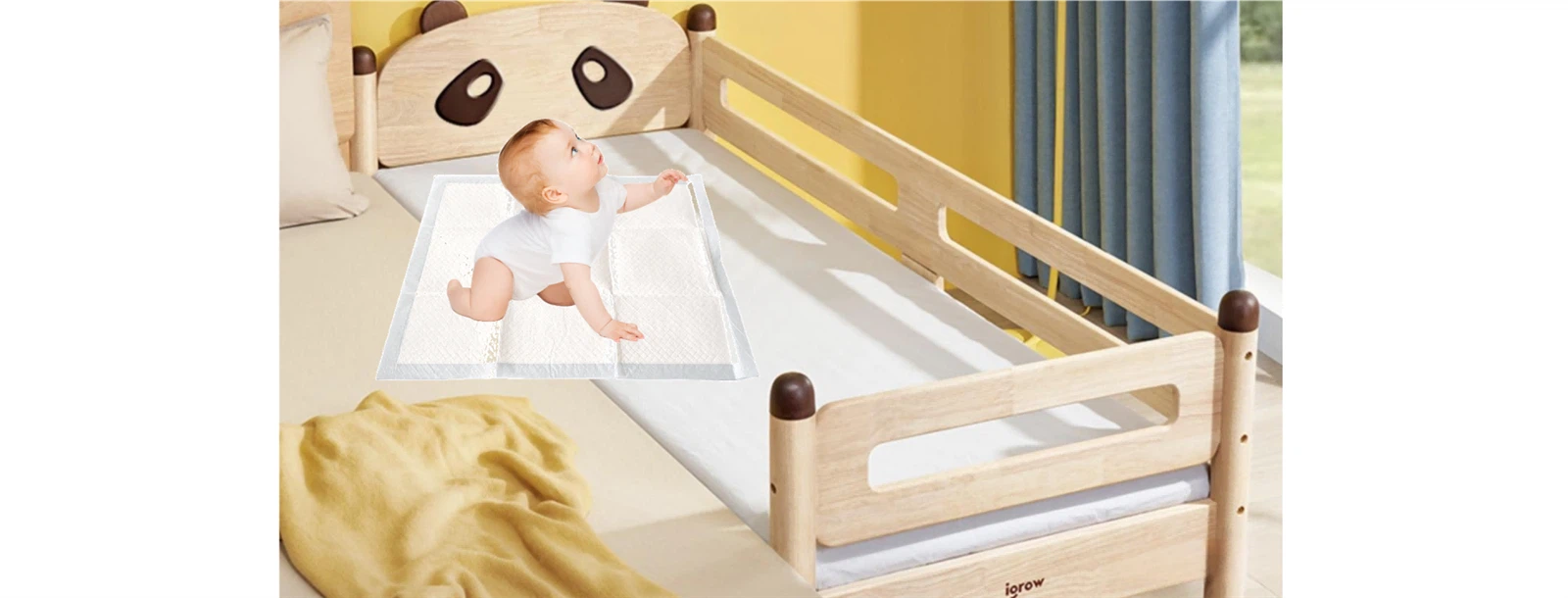
- Size by Age: Newborns may need 30cm×40cm, while older babies may need 45cm×60cm or larger for full coverage.
- Check Labels: Verify the production date, shelf life, and compliance standards; avoid unbranded products.
- Focus on Functional Requirements:
Portability: Choose individually wrapped or small packs for outings.
Sensitive Skin: Opt for "cotton top layer," "unscented," or "hypoallergenic" options.
2. How to store them? What is the shelf life?
- Storage conditions: Keep sealed in a cool, dry place away from direct sunlight or moisture to prevent the absorbent layer from clumping.
- Shelf life: Unopened pads typically expire in 2–3 years. After opening, use within 3 months to avoid bacterial growth.
V. Environmental and Economic Considerations
1. Are disposable pee pads eco-friendly?
- Traditional products: Made mainly of plastic and synthetic fibers, they are non-biodegradable and may increase environmental waste with frequent use.
- Alternative options: Choose eco-friendly pads made of biodegradable materials (e.g., cornstarch-based non-woven fabric) or reduce usage by prioritizing reusable waterproof pads.
2. Is the long-term cost high?
- Single-use cost: Each pad costs about 0.5–2 RMB. For occasional use (1–2 pads daily), monthly costs are around 15–60 RMB, suitable for special occasions.
- Cost-saving tips: Replace with washable pads for non-essential scenarios (e.g., home diaper changes) to reduce expenses.
VI. Common Misconceptions
1. Can baby pads replace diapers?
Not recommended!Baby pads are flat and lack wrap-around design, making them unsuitable for containing feces. Prolonged use may cause leakage or discomfort, as they are only for temporary isolation.
2. Are thicker pads more absorbent?
Not necessarily! Absorbency depends on the amount of superabsorbent polymer, not thickness. Some ultra-thin pads achieve higher efficiency through layered structures (e.g., multi-compound absorbent layers) while being more breathable.
Conclusion
Disposable baby pads are convenient hygiene aids that can improve parenting efficiency when used properly. However, pay attention to material safety, timely replacement, and environmental impact. Parents should select products based on actual needs and combine them with reusable items to reduce waste. In case of allergies, diaper rash, or other abnormalities, discontinue use and consult a doctor.