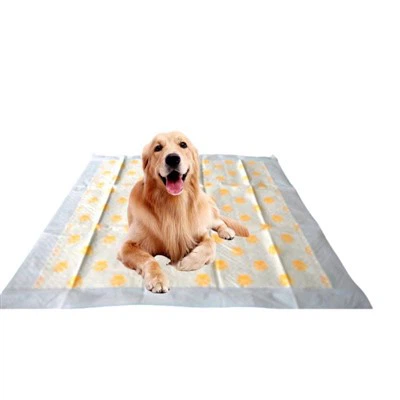

The differences between purchasing disposable bed pads from small and large enterprises are mainly reflected in multiple dimensions such as product quality, supply capacity, service systems, and cost control. The following is a specific comparative analysis:
I. Product Quality and Stability
Large Enterprises
- Advantages: They have a complete quality control system, with strict standards from raw material procurement to finished product inspection (e.g., Tianjin Yiyi has established a professional quality inspection team and uses advanced testing equipment). Products are fully qualified (e.g., certified by ISO 9001, FSC, GRS, etc.), with higher material safety (e.g., free of fluorescent agents and bleaches), and more stable performance indicators (water absorption, leak - proofing, breathability).
- Case: Most bed pads produced by large enterprises have passed strict third - party tests in terms of absorption efficiency and bacterial content, making them suitable for scenarios with high hygiene requirements (such as medical institutions and elderly care facilities).
Small Enterprises
- Risks: They may lack standardized quality inspection processes, and raw materials come from unstable sources (such as recycled pulp or mixed pulp). Pads are prone to problems like uneven thickness, insufficient absorption, excessive fluorescent agents, or excessive bacterial content. Long - term use may increase nursing risks (such as skin allergies or infections).
II. Supply Capacity and Production Capacity
Large Enterprises
- Advantages: They own large - scale production bases and automated production lines of disposable pads(e.g., Tianjin Yiyi has an annual production capacity of 4.6 billion pieces), capable of meeting large orders and long - term stable supply. They are especially suitable for peak seasons or urgent procurement needs, with low risk of out - of - stock.
- Flexibility: Although production capacity is high, adjusting production plans may take a certain period, and the response speed to extremely niche specifications is slow.
Small Enterprises
- Limitations: Production capacity is limited. If the purchase quantity of disposable adult underpads is large (e.g., exceeding monthly capacity), partial delivery or delayed supply may occur, and raw material shortages during peak seasons may lead to supply interruptions.
- Advantages: If the purchase quantity of disposable adult underpads is small, small enterprises may be more flexible and can arrange production quickly.

III. Price and Cost Control
Large Enterprises
- Bulk Purchase Advantages: Due to economies of scale, raw material procurement costs of large enterprises are low, and standardized production reduces unit costs.
- Standardized Pricing: First, laboratories test the material, absorption rate, re - penetration rate, etc., based on sample pads provided by customers. Then, the cost accounting department makes quotations according to product performance. The pricing system is rigorous and standardized, with limited bargaining space, but long - term cooperation or large orders can enjoy price discounts.
Small Enterprises
- Fluctuating Prices: Production costs are more obviously affected by raw material markets (e.g., prices are prone to increase when bamboo pulp or PE film prices rise), and pricing may be higher due to small order quantities. However, some small enterprises may offer short - term low prices to capture the market, so be wary of quality risks behind low prices.
- Bargaining Space: When the order quantity is moderate, prices can be negotiated with small enterprises, offering higher flexibility.
IV. Customization Services and Product Diversity
Large Enterprises
- Professional Customization Capability: They can provide systematic customization solutions of disposable bed pads (such as size customization, logo printing, absorption capacity customization, fragrance addition, etc.), and have R & D team support (e.g., Tianjin Yiyi has more than 80 patents), capable of meeting complex functional requirements (such as medical - grade antibacterial properties or special material softness).
- Complete Specifications: Conventional sizes (e.g., 60×90cm, 70×150cm) of disposable bed pads are well - stocked, requiring no additional mold opening, suitable for diverse scenarios.
Small Enterprises
- Customization Limitations: They may lack R & D capabilities and can only provide basic customization (such as simple size adjustment or logo printing), making it difficult to achieve special functions (such as high absorption capacity or eco - friendly materials).
V. After - Sales Service and Cooperation Stability
Large Enterprises
- Perfect Service System: They provide pre - sales consultation (needs analysis, specification recommendation), in - sales follow - up (order progress feedback), and after - sales support (quality issue return and exchange, technical support), with fast response speed, suitable for long - term cooperation.
- Low Cooperation Risk: Enterprises operate standardizedly, have strong risk resistance, and are less likely to interrupt cooperation due to operational issues.
Small Enterprises
- Uncertain Service: They may lack a professional after - sales team, shirk responsibilities or solve problems inefficiently when quality issues arise. If the enterprise is small, it may suddenly stop production due to capital chain problems, affecting cooperation stability.

VI. Qualifications and Compliance
Large Enterprises
- Complete Qualifications: They have medical device production licenses (for medical - grade disposable bed pads), ISO quality management system certifications, environmental certifications, etc., with strong product traceability, suitable for institutions with high compliance requirements (such as public hospitals).
Small Enterprises
- Qualification Risks: They may not have relevant industry certifications, and product safety cannot be guaranteed (such as failing bacterial content tests or exceeding formaldehyde standards), and may face compliance complaints in commercial scenarios (such as customers questioning incomplete qualifications).
Summary: How to Choose?
Scenarios where large enterprises are preferred:
Large - scale procurement, need for long - term stable supply, high requirements for quality and safety (such as medical scenarios), need for professional customization services, and emphasis on brand endorsement and compliance.
Scenarios where small enterprises can be considered:
Extremely small purchase quantity, extremely sensitive to price (and able to accept quality fluctuation risks), simple needs (such as non - medical scenarios for temporary use only), and need for quick small - batch trial orders.
It is recommended to request samples for quality testing before procurement, verify enterprise qualifications, and evaluate your own priorities for supply stability and service response to balance costs and risks.