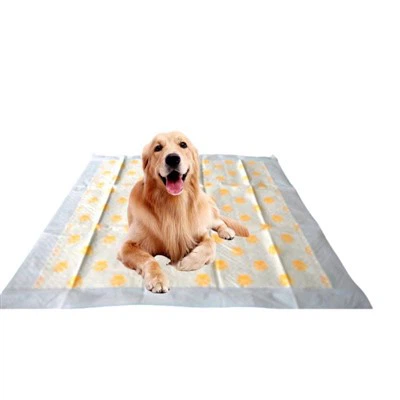

I. Optimization of Supply Chain and Supplier Selection
Give priority to suppliers near ports
- Advantages: Shorten the transportation distance and reduce the sea/land transportation costs (for example, compared with inland enterprises, suppliers in coastal cities of China can reduce logistics costs by 10% - 20%).
- Case: Choose factories in port cities such as Tianjin, Qingdao, and Shanghai. The goods can be directly transported by containers, reducing transit losses and time costs. For example, Tianjin Yiyi Hygiene Products Co., Ltd., the largest disposable pee pad factory in China, is only a 1 - hour drive from Tianjin Port. Moreover, Tianjin Yiyi has its own fleet and warehousing center, and can directly load containers and send them to the port without transshipment.
Skip traders and directly connect with factories
- Cost difference: Traders usually add a 5% - 10% markup as intermediate profit. Cooperating directly with factories can save this part of the cost.
- Operation suggestions: Screen source factories through industry exhibitions, B2B platforms or on - site inspections, and require them to provide ISO certification and production scale proof (for example, enterprises with an annual production capacity of more than 1 billion pieces have more cost advantages). The annual production capacity of disposable beadpads of Tianjin Yiyi Hygiene Products Co., Ltd. is 4.6 billion pieces.
Choose suppliers with overseas factories to avoid tariffs
- Applicable scenario: Disposable incontinence bed pads are exported from China to regions with high tariffs such as Europe and the United States.
- Case: If a supplier (such as Tianjin Yiyi) has a factory in Southeast Asia (Cambodia), local tariff preference policies can be utilized to reduce import costs. At present, the total tariff for exports from China to the United States is 37.5%, and the total tariff for exports from Cambodia to the United States is 10%.
| Exporting Country | Tariff Composition | Total Tax Rate | Policy Basis |
|---|---|---|---|
| China | Basic tax rate 0% + Section 301 tariff 7.5% + Reciprocal tariff 30% | 37.5% | 2025 Executive Order No. 14257 and Sino - US Talks Agreement |
| Cambodia | Basic tax rate 0% (GSP) + Reciprocal tariff 10% | 10% | U.S. Generalized System of Preferences and ASEAN Trade Framework Agreement |
II. Optimization of Product Selection and Design
Focus on basic functions and reduce unnecessary additional functions
- Cost breakdown: Complex functions of disposable adult underpads such as surface patterns, fragrances, and extended leak - proof edges may increase the unit price by 20% - 40%. Basic models (only with core absorption function) are more cost - effective.
- Data reference: Tests show that basic - model diaper pads (absorption capacity ≥ 1500ml) can already meet 80% of daily care needs, and there is no need to pay a premium for non - essential functions.

Optimize material selection to balance cost - performance ratio
- Surface material: Using long - fiber spunbond non - woven fabric (such as the non - woven fabric produced by Tianjin Yiyi itself) as the surface material of disposable adult underpads is 30% lower in cost than the soft and skin - friendly spunlace non - woven fabric. However, the difference in touch can be reduced through process optimization.
III. Logistics and Warehousing Cost Control
Maximize the utilization rate of packing and container loading
- Require suppliers to optimize the packaging size according to the container specifications to maximize the container loading utilization rate.
- Improve the space utilization rate of product outer boxes. The edge gap after color bags are packed in boxes shall not be greater than 2 cm.
Bulk purchasing
Scale effect: When the annual order quantity of disposable adult underpads exceeds 10 million pieces, negotiations can be carried out with suppliers for step - by - step prices.
IV. Long - term Cooperation
- Sign long - term framework agreements: Lock in the purchase quantity for 1 - 3 years (such as an annual purchase of 50 million pieces), in exchange for a fixed discount from the supplier, and agree on a price adjustment mechanism when the price of raw materials fluctuates.
- Joint development: Cooperate with factories to optimize product design and reduce production costs from the source.
V. Cost Comparison and Risk Management
| Strategy | Cost Reduction Range | Potential Risks | Countermeasures |
|---|---|---|---|
| Directly purchase from factories instead of traders | 15% - 30% | Slow after - sales response, quality fluctuations | Require goods inspection and factory inspection |
| Choose basic - model products | 20% - 40% | Insufficient functions affect user experience | Test samples in advance to confirm that core indicators meet the standards |
| Overseas factories to avoid tariffs | 10% - 25% | Unstable production capacity, long transportation cycle | Require overseas factories to provide production capacity proof and reserve buffer inventory |
Summary
To reduce procurement costs, it is necessary to approach from multiple dimensions, including the supply chain (supplier selection, logistics optimization), products (function simplification, material selection), and cooperation models (long-term agreements, joint development). At the same time, it should be noted that the premise of cost optimization is to ensure that the core product indicators (such as absorption capacity and leak-proof performance) meet the standards, so as to avoid quality problems caused by low prices from affecting the reputation of the terminal market.