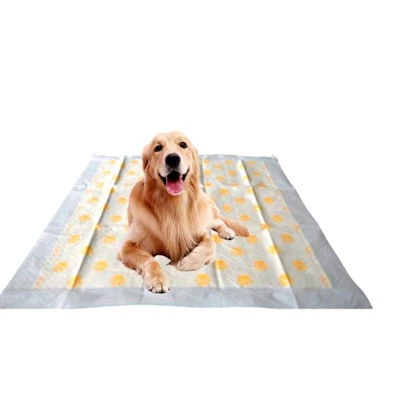


For B‑side buyers, disposable dog pee pads are repeat‑purchase consumables. Product performance directly affects end‑user feedback, after‑sales disputes and the stability of long‑term orders. Below are key factors recommended for focus.
Absorption Speed
Absorption speed refers to the time required for liquid to fully penetrate into the core layer after contacting the top sheet of disposable dog pee pads, with no free standing liquid remaining on the surface. Slow absorption leaves liquid lingering on the top surface. Pets stepping on the pad will get their paws wet and track urine around.
Absorption Capacity
Absorption capacity means the total volume of liquid that a single pee pad can hold. It is mainly determined by SAP, with other materials playing secondary roles. There is no absolute correlation between absorption capacity and the total gram weight of one pad. Under the same basis weight, different raw material formulas lead to notable differences in actual liquid retention capacity. Buyers may set absorption capacity requirements based on target application scenarios. Lower‑capacity specifications suit puppy breeding environments with frequent pad replacement; higher absorption capacity is preferred for large‑breed dogs or long‑term placement inside crates.

Rewet Value
Rewet refers to the volume of liquid that flows back from the absorbent core to the top sheet under specified pressure after the potty training pad absorbs liquid. Rewet performance is mainly associated with the gel strength of SAP and the structural stability of the core layer. High rewet results in a damp top surface and poor end‑user experience.
Leakage Resistance
Leakage falls into two categories: bottom film leakage and edge side leakage. Bottom film leakage largely depends on the thickness, uniformity and tensile strength of the PE film. An excessively thin bottom film may tear and cause liquid seepage onto floors. Side leakage relates to edge sealing technology and edge structure. Weak heat sealing on edges allows liquid to spill out sideways. In addition, inward‑folded edges help reduce side leakage risks.